Adverse Media KYC Dispute
Adverse media appearing in KYC screening causes automatic rejection by banks. We challenge negative media records, request corrections, and manage your digital reputation with regulated entities.
📋 On This Page
Adverse-media screening is now a primary KYC trigger — a single negative article, even unproven or historical, can cause account refusal or closure.
- Major databases (World-Check, LexisNexis, Dow Jones, Orbis, ComplyAdvantage) aggregate news from thousands of sources and flag any negative association.
- Common problems: never-prosecuted investigations, unproven allegations, stale coverage, mistaken identity, and politically motivated reports.
- The legal approach is multi-track: GDPR rectification/erasure, representations to the institution, supervisory-authority complaints, and defamation action where content is untrue.
- Historical but accurate adverse media can be challenged under the GDPR “right to be forgotten” (Article 17).
- Clearing database entries reduces enhanced-due-diligence escalation and supports bank-account restoration.
Adverse Media and KYC — How It Works
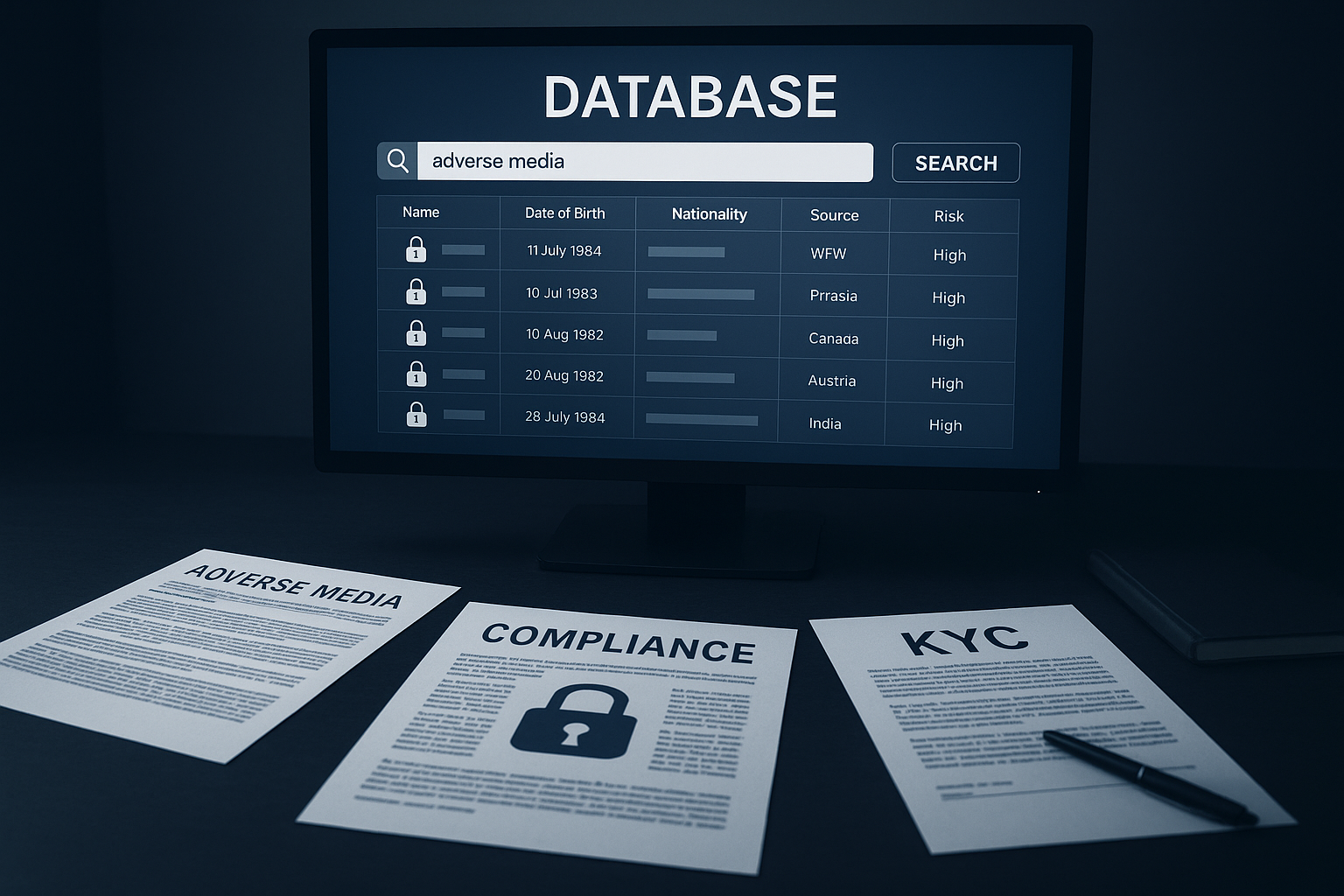
Banks and regulated entities conduct adverse media screening as part of Customer Due Diligence (CDD) and Enhanced Due Diligence (EDD) under Anti-Money Laundering regulations. Automated screening tools search news databases, court records, and online sources for negative information associated with a customer’s name. Even a single adverse news article — regardless of accuracy or outcome — can trigger a compliance flag leading to account closure or service refusal.
| Screening database | Provider |
|---|---|
| World-Check | Refinitiv / LSEG |
| Nexis Diligence+ / Risk Solutions | LexisNexis |
| Risk & Compliance | Dow Jones |
| Orbis | Bureau van Dijk / Moody’s Analytics |
| ComplyAdvantage, ACAMS | Independent providers |
Common Adverse Media Problems in KYC
- Articles about investigations that were never prosecuted or resulted in acquittal
- News reports about allegations that were never proven
- Historical adverse coverage that does not reflect current circumstances
- Coverage that conflates a client with a different person of the same name
- Politically motivated adverse coverage from unreliable sources
Legal Approach to Adverse Media Disputes
We take a multi-track approach: (1) GDPR erasure or de-indexation requests against data aggregators and news publishers; (2) formal written representations to the screening institution explaining the legal and factual inaccuracies; (3) complaints to data protection authorities where GDPR rights are violated; (4) legal action against the publisher where content is defamatory.
How Adverse Media Causes Real Financial and Reputational Harm
Adverse media — negative news articles, reports, and online content about an individual or company — has moved from a background consideration in financial compliance to a primary KYC screening trigger. Virtually every major financial institution, professional services firm, and regulated business now runs systematic adverse media checks as part of its client onboarding and ongoing monitoring processes. The databases and screening tools used — Refinitiv World-Check, LexisNexis Nexis Diligence+, Dow Jones Risk & Compliance, ACAMS, and others — aggregate news content from thousands of sources and flag any negative association, regardless of whether the underlying allegation was proven or even formally investigated.
The consequences are immediate and concrete. A single adverse media hit — even a historical allegation that was never prosecuted, a politically motivated report, or a case of mistaken identity — can result in: refusal of account opening by a bank; termination of an existing banking relationship; refusal of insurance or professional indemnity coverage; adverse impact on investment applications; and loss of business relationships where counterparties apply their own KYC screening. The harm is amplified by the global reach of these databases and the tendency of institutions to act on screening results without detailed independent investigation.
Types of Adverse Media and Their Removal
Not all adverse media problems are identical. The legal approach depends on the nature and source of the content:
- False or inaccurate reporting: Where the underlying news article or database entry contains factually incorrect information, the challenge is straightforward — provide evidence of the inaccuracy and demand correction or removal. If the publisher or database refuses, GDPR-based data correction rights and defamation claims are available.
- Stale reporting: Where accurate historical information has been retained in databases long after it ceased to be relevant — for example, a regulatory investigation that was closed without findings years ago — the “right to be forgotten” (GDPR Article 17) provides a basis for deletion. The relevant consideration is whether the continued processing of the data serves a legitimate purpose proportionate to the interference with the individual’s rights.
- Politically motivated or defamatory content: Where the content reflects a coordinated reputational attack — for example, articles commissioned or placed by a commercial or political opponent — a more aggressive legal strategy involving defamation, harassment, and data protection claims may be appropriate.
GDPR Rights as a Tool Against Adverse Media Databases
The GDPR provides a comprehensive framework of individual data rights that applies directly to adverse media screening databases operating in or targeting EU/EEA persons. Key rights include: Article 15 (right of access — to know exactly what data the database holds about you); Article 16 (right to rectification — correction of inaccurate data); Article 17 (right to erasure — deletion of data that no longer serves a legitimate purpose); and Article 21 (right to object to data processing). We exercise these rights systematically against the major screening databases and coordinate them with the underlying source correction or removal strategy.
GDPR Rights Against Screening Databases
| GDPR right | What it does |
|---|---|
| Article 15 — Access | Know exactly what data the database holds about you |
| Article 16 — Rectification | Correct inaccurate data |
| Article 17 — Erasure | Delete data that no longer serves a legitimate purpose |
| Article 21 — Objection | Object to processing based on legitimate interests |
Frequently Asked Questions
The most widely used adverse media screening databases include: Refinitiv World-Check (now owned by LSEG); LexisNexis Nexis Diligence+ and Risk Solutions; Dow Jones Risk & Compliance; ACAMS Risk Assessment; Orbis (Bureau van Dijk / Moody’s Analytics); ComplyAdvantage; and numerous national and regional databases. These tools aggregate news from thousands of sources and flag adverse associations. An individual may appear in multiple databases simultaneously from a single news article, meaning a coordinated multi-database challenge is typically required.
The ability to remove data from adverse media screening databases depends on the nature of the data and the legal basis for its processing. Under GDPR, you have the right to request rectification of inaccurate data and erasure of data that is no longer relevant or necessary. Databases that process data of EU/EEA individuals must comply with these requests unless they can demonstrate a legitimate overriding interest. We submit formal GDPR data requests to major screening databases and challenge refusals through data protection authorities.
Enhanced due diligence (EDD) is a heightened level of customer scrutiny applied by financial institutions to higher-risk clients — including those with adverse media, PEP status, or connections to high-risk jurisdictions. When adverse media is flagged during KYC screening, the institution typically escalates to EDD procedures: requesting more detailed information, requiring senior management approval, or in some cases, exiting the relationship. Clearing adverse media database entries reduces the likelihood of EDD escalation and the associated reputational and practical consequences.
True but historical information can still be challenged on “right to be forgotten” grounds under GDPR Article 17. The key question is whether the continued processing of the information serves a legitimate purpose proportionate to the harm to the individual. Factors relevant to this assessment include: how long ago the events occurred; whether they resulted in any formal legal consequence; whether the individual has demonstrated rehabilitation or changed circumstances; and whether the continued processing creates ongoing harm disproportionate to any public interest in the information.
Bank account closure triggered by adverse media is a common consequence of KYC screening. The challenge strategy has two components: engaging with the bank to understand the specific adverse media that triggered the closure and providing evidence to correct or contextualise it; and simultaneously challenging the adverse media database entry at the source. If the bank has acted in breach of its regulatory obligations — for example, by failing to give adequate notice or by acting on clearly inaccurate information — a regulatory complaint and potential legal claim against the bank may also be appropriate.