AML Investigation Defence Cyprus
Being targeted in an AML investigation in Cyprus requires urgent legal action. We protect your rights during MOKAS and police investigations, challenge asset freezes, and prevent prosecution where possible.
📋 On This Page
AML Investigations in Cyprus — Who Investigates
Anti-money laundering investigations in Cyprus are conducted by: MOKAS (the Financial Intelligence Unit), the Cyprus Police Financial Crime Unit, the Central Bank of Cyprus, and CySEC. Investigations often involve simultaneous requests from foreign law enforcement under Mutual Legal Assistance treaties.
Early Signs of AML Investigation
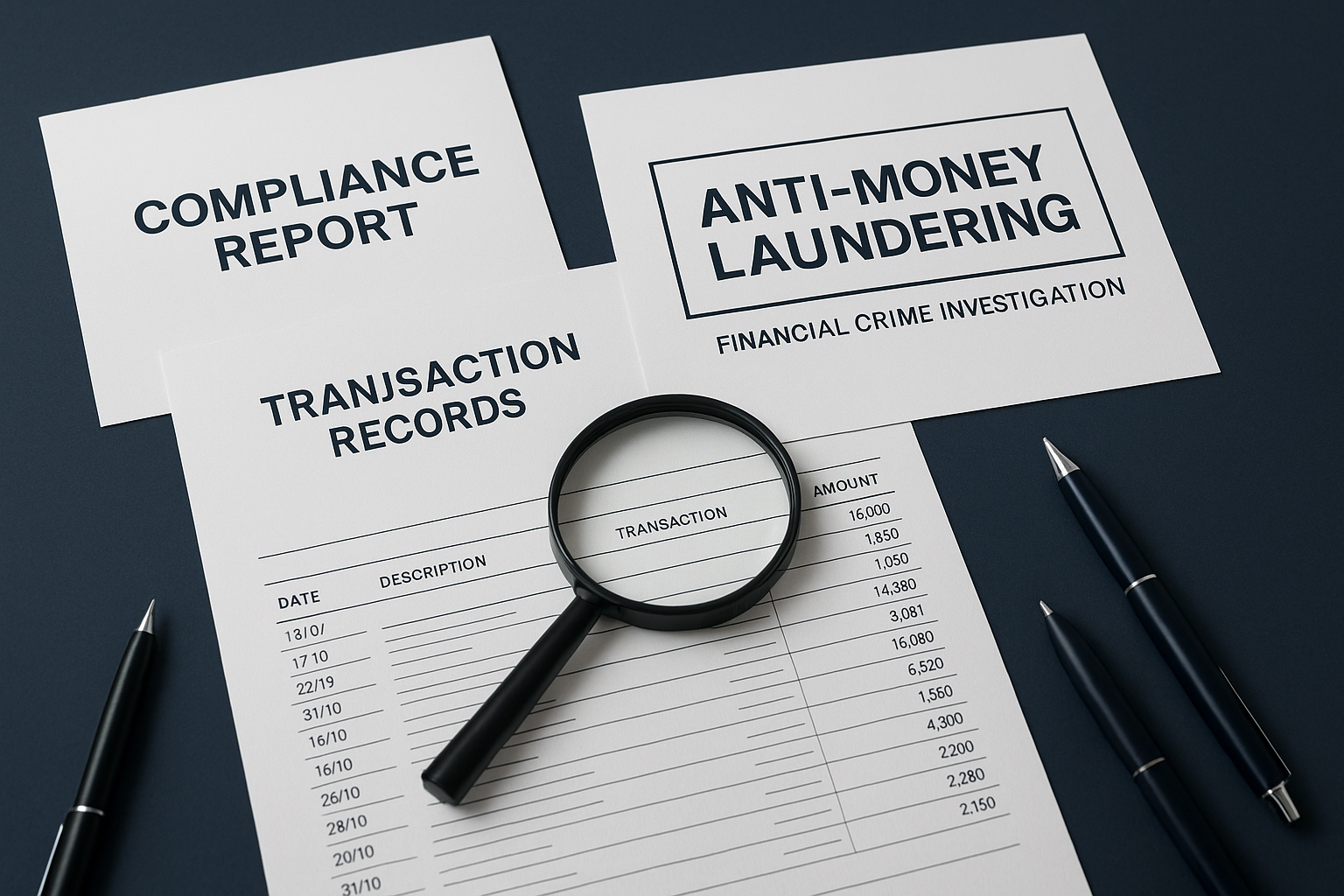
You may be under AML investigation if: your bank accounts have been frozen; you have received a “suspicious transaction report” notification; police or MOKAS have contacted your bank or professional advisers; you have been asked for documentation about transactions; or you have been refused banking services across multiple institutions.
Protecting Your Rights During AML Investigation
Key priorities at the investigation stage include:
- Ensuring any police interview is attended with legal representation
- Applying for access to or variation of any asset freezing orders
- Responding to formal requests for documentation in a legally protected manner
- Making representations to prosecutors to prevent charge if the evidence is insufficient
- Managing international law enforcement cooperation requests
Defending AML Charges at Trial
Money laundering charges require proof that assets are proceeds of crime and that the accused knew or suspected this. We challenge the predicate offence, the money trail evidence, and the knowledge and intent elements. We also challenge disproportionate confiscation applications following conviction.
The Cypriot AML Legal Framework
Cyprus has one of the most developed anti-money laundering legal frameworks in the EU. The primary AML legislation is the Prevention and Suppression of Money Laundering Activities Law (L.188(I)/2007, as repeatedly amended to implement EU AML Directives). The Unit for Combating Money Laundering (MOKAS) is the Financial Intelligence Unit responsible for receiving and analysing suspicious transaction reports (STRs) and coordinating AML investigations. MOKAS works closely with the Cyprus Police, the Attorney General’s Office, and international counterparts through Egmont Group channels.
Cyprus is also a member of the Council of Europe’s MONEYVAL committee, which conducts regular mutual evaluations of Cyprus’s AML framework. The combination of EU Directive implementation, MOKAS operational capacity, and international cooperation obligations makes Cyprus’s AML enforcement increasingly sophisticated. Individuals and companies subject to MOKAS investigation cannot assume that the Cyprus AML system is less rigorous than other EU jurisdictions — it has become significantly more active since 2018.
What Triggers an AML Investigation in Cyprus?
AML investigations in Cyprus are typically triggered by one or more of the following: a suspicious transaction report (STR) filed by a regulated entity such as a bank, law firm, or accountant; information received through international cooperation channels from a foreign FIU or law enforcement agency; a referral from the Cyprus tax authorities or Securities and Exchange Commission; intelligence obtained during an unrelated criminal investigation; or a complaint or tip from a third party.
International cooperation is particularly significant for clients with cross-border financial activity. Cyprus is a member of the Egmont Group and has bilateral information exchange agreements with dozens of FIUs worldwide. A request from a foreign authority — including requests from jurisdictions that would not have direct extradition access to Cyprus — can trigger a MOKAS investigation even where the underlying conduct occurred entirely outside Cyprus.
Asset Freezing in AML Cases
One of the most devastating consequences of an AML investigation in Cyprus is asset freezing. MOKAS and the Cyprus courts have broad powers to freeze assets suspected of being the proceeds of crime, even before any charge is filed. A freezing order can immobilise bank accounts, real estate, company shares, and other assets at short notice. The order may be obtained ex parte (without notice to the subject), meaning the first indication of its existence may be a letter from the bank or a visit from law enforcement.
Challenging a freezing order requires prompt legal action. The Cyprus courts will review an ex parte freezing order on an inter partes basis if the affected party applies. Grounds for challenge include: the investigation is not based on reasonable grounds; the assets are not connected to the alleged predicate offence; the freeze is disproportionate to the alleged proceeds; or the applicant’s rights to own property (ECHR Article 1, Protocol 1) are being unjustifiably infringed. We prepare urgent challenges to AML freezing orders and have experience in successfully reversing disproportionate orders. For further reading, see our guide on blockchain AML investigation defence. For further reading, see our guide on FATF grey list.
Frequently Asked Questions
MOKAS (the Unit for Combating Money Laundering) is Cyprus’s Financial Intelligence Unit and the primary AML law enforcement body. It has powers to: receive and analyse suspicious transaction reports; conduct financial intelligence analysis; apply to courts for asset freezing orders; cooperate with foreign FIUs through the Egmont Group; coordinate with Cyprus Police for criminal investigations; and prosecute money laundering offences through the Attorney General’s Office. MOKAS investigations can run in parallel with criminal proceedings and are increasingly coordinated with EU and international partners.
Yes. Under Cyprus AML law, the predicate offence — the underlying crime from which the alleged proceeds are derived — does not need to have occurred in Cyprus. If funds connected to a foreign predicate offence pass through Cyprus, or if assets are held in Cyprus, MOKAS has jurisdiction to investigate and seek freezing orders regardless of where the underlying conduct took place. International cooperation requests from foreign FIUs frequently trigger Cyprus AML investigations into extraterritorial activity.
If you are subject to a MOKAS investigation in Cyprus, you have the right to legal representation at all stages. You are not required to answer questions that might incriminate you. If your assets have been frozen by court order, you have the right to apply to the court to set aside or vary the order. You are entitled to be informed of the nature of the allegations against you. We recommend retaining specialist legal advice at the earliest possible stage — preferably before any formal interview.
Money laundering in Cyprus is prosecuted under L.188(I)/2007. The prosecution must prove that assets are the proceeds of a predicate offence and that the defendant knew or ought to have known this. The offence is broad — it can include concealing, converting, transferring, or using criminal proceeds. Penalties include imprisonment of up to 14 years and substantial fines. Serious money laundering charges are tried in the Assize Court before a judge sitting alone.
A Cyprus AML investigation does not by itself trigger extradition. However, if a foreign country simultaneously seeks extradition on money laundering or predicate offences, MOKAS and the Cyprus courts handle the AML investigation in parallel with extradition proceedings. In some cases, Cyprus authorities have coordinated closely with requesting states on asset recovery and criminal proceedings while extradition proceedings are pending. Specialist legal representation covering both the AML investigation and any extradition exposure is essential.