Sanctions Lawyer Cyprus
Advising individuals and companies on OFAC, EU, and UK sanctions exposure. Delisting petitions, blocked funds release, and sanctions compliance from Cyprus.
📋 On This Page
International sanctions can freeze assets, block banking access, and expose individuals and businesses to criminal liability overnight. Cyprus, as a financial and shipping hub at the intersection of European and Middle Eastern commerce, sees a disproportionate share of complex sanctions cases — from shipowners and commodity traders facing OFAC secondary sanctions to executives challenging EU restrictive measures. Our sanctions lawyers advise on the full spectrum of international sanctions regimes.
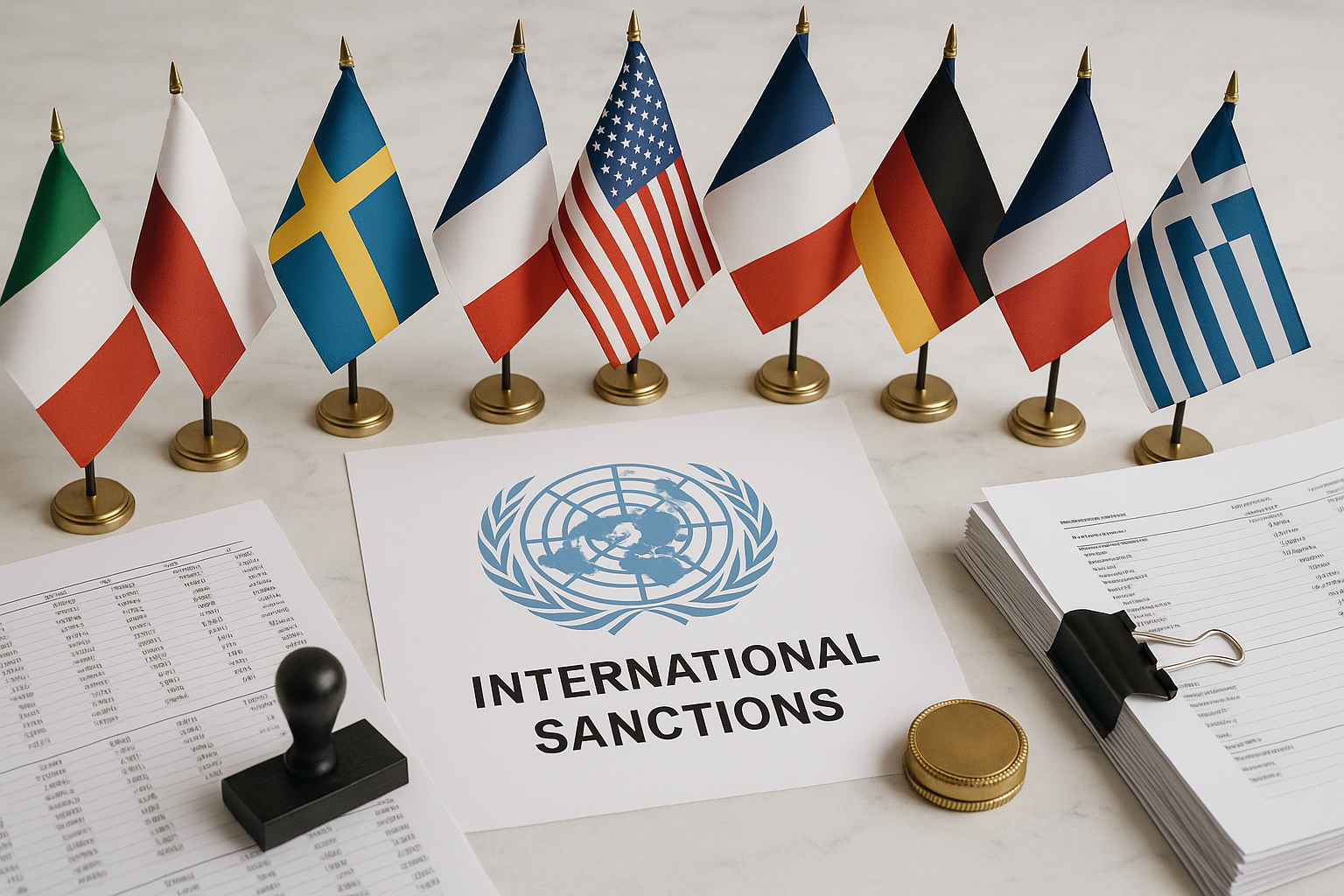
Sanctions can freeze assets and block banking overnight — Cyprus, as a financial and shipping hub, sees a disproportionate share of complex OFAC, EU and UK cases.
- Four parallel regimes matter: EU (CJEU), US OFAC (SDN list), UK OFSI, and UN — each with its own list and challenge route.
- Sectoral sanctions can bite even without individual designation.
- Cyprus companies, banks and shipping firms face heightened exposure, especially on Russia-related programmes.
- A compliance-first approach (screening, monitoring, licensing) sharply reduces designation and enforcement risk.
- When a designation hits, the first 48–72 hours of crisis management are decisive.
The Multi-Regime Sanctions Landscape
Sanctions law in 2025 involves a complex intersection of multiple parallel regimes — each with different lists, different scope, different procedures, and different challenge routes. The principal regimes affecting individuals and businesses with Cyprus connections are:
- EU sanctions: Council regulations adopted under Articles 215 and 29 TFEU, implemented directly in all EU member states including Cyprus. Challenges go to the CJEU.
- US OFAC sanctions: Executive order-based programs and statutory sanctions (CAATSA, IEEPA) administered by the US Treasury. SDN list designation. Challenges go through OFAC administrative review and US federal court judicial review.
- UK OFSI sanctions: Post-Brexit autonomous UK sanctions under the Sanctions and Anti-Money Laundering Act 2018. UK consolidated list. Challenges through OFSI administrative review and UK High Court judicial review.
- UN sanctions: Security Council resolutions that bind all UN member states. Challenges go through the UN Ombudsperson (for Al-Qaeda and associated persons) or through national courts challenging UN Security Council compliance.
- Sectoral sanctions: Including US, EU, and UK sectoral restrictions on dealing with specific Russian, Iranian, or other designated sectors, without requiring individual designation.
| Regime | Basis | Challenge route |
|---|---|---|
| EU | Council regulations (Arts 215/29 TFEU) | CJEU annulment |
| US — OFAC | Executive orders, CAATSA, IEEPA | OFAC review + US federal court |
| UK — OFSI | SAMLA 2018 | OFSI review + UK High Court |
| UN | Security Council resolutions | UN Ombudsperson / national courts |
| Sectoral | US/EU/UK sector restrictions | Regime-specific |
Cyprus as a Sanctions Compliance Hub
Cyprus plays a significant role in international sanctions compliance because of its position as a major hub for international business — particularly for Russian, Middle Eastern, and Eastern European business structures. Cyprus-registered companies, Cyprus banking relationships, and Cyprus professional services providers have all been identified in sanctions compliance enforcement actions. This creates both risk and opportunity: risk for Cyprus-connected structures where compliance is inadequate; opportunity for legitimate businesses that want to use Cyprus’s developed professional infrastructure for lawful international activity while ensuring full sanctions compliance.
We advise Cyprus companies and their beneficial owners on comprehensive sanctions compliance programs — including screening protocols, transaction monitoring, licence application strategies, and rapid response procedures for unexpected sanctions exposure. A compliance-first approach significantly reduces the risk of sanctions designation, regulatory enforcement, and reputational damage from inadvertent sanctions violations.
When Sanctions Compliance Fails — Crisis Management
When a sanctions designation occurs — whether an OFAC SDN listing, an EU Council designation, or a UK OFSI designation — the immediate priority is crisis management: identifying the specific regime and its effects; assessing what assets are frozen and what transactions are prohibited; identifying any immediately available licences or exemptions; communicating with key banking and business relationships; and beginning the delisting process. The first 48-72 hours after a designation are the most important for crisis management — speed and precision in the response significantly affects the medium and long-term outcome. For further reading, see our guide on what it means to be sanctioned. For further reading, see our guide on complete sanctions legal services hub.
First 48–72 Hours After a Designation
- Identify the specific regime (OFAC / EU / UK) and its precise effects.
- Assess which assets are frozen and which transactions are prohibited.
- Identify any immediately available licences or exemptions.
- Communicate with key banking and business relationships.
- Begin the delisting / annulment process.
Frequently Asked Questions
Yes. EU sanctions apply to all persons and entities within the EU (including Cyprus-registered companies operating in Cyprus or elsewhere in the EU), to all EU nationals wherever located, and to transactions conducted using EU currency through EU financial systems. A Cyprus company whose beneficial owner is an EU-designated person may itself be affected by the designation — beneficial owner sanctions can reach through to the company structure.
Targeted (individual) sanctions designate specific named individuals and entities on a list — typically freezing their assets and prohibiting transactions with them. Sectoral sanctions apply to a defined sector or type of activity — for example, US CAATSA sectoral sanctions prohibit certain dealings with Russia’s defence, intelligence, or energy sector without designating every individual company or person in those sectors. A person or company may be subject to sectoral sanctions even if not individually listed on any sanctions list.
Cyprus banks are required by EU regulations and Cyprus Central Bank guidance to comply with all applicable EU sanctions. They must freeze assets of EU-designated persons, refuse to open accounts for EU-designated persons, and report any suspicious connections to sanctions violations to MOKAS. In practice, many Cyprus banks apply significantly broader compliance procedures — refusing services to persons connected to high-risk jurisdictions or sectors even without a formal sanctions designation, as part of their de-risking strategy.
The sanctions impact of a family member’s designation depends on the specific regime and the nature of your relationship. Under most sanctions regimes, an entity or individual is not automatically designated solely because a family member is designated — but connections through shared business, financial flows, or the sanctions regime’s specific “associated persons” provisions can create risk. We advise on the specific exposure for Cyprus banking relationships in cases involving family connections to designated persons.
In Cyprus, EU financial sanctions are implemented primarily through the Ministry of Finance and the Central Bank of Cyprus. The Ministry of Finance issues licence decisions for transactions involving EU-sanctioned persons. The Central Bank supervises banks’ compliance with sanctions obligations. The Cyprus Police and the Attorney General’s Office handle criminal enforcement of sanctions violations. We coordinate with all relevant Cyprus authorities in sanctions matters.