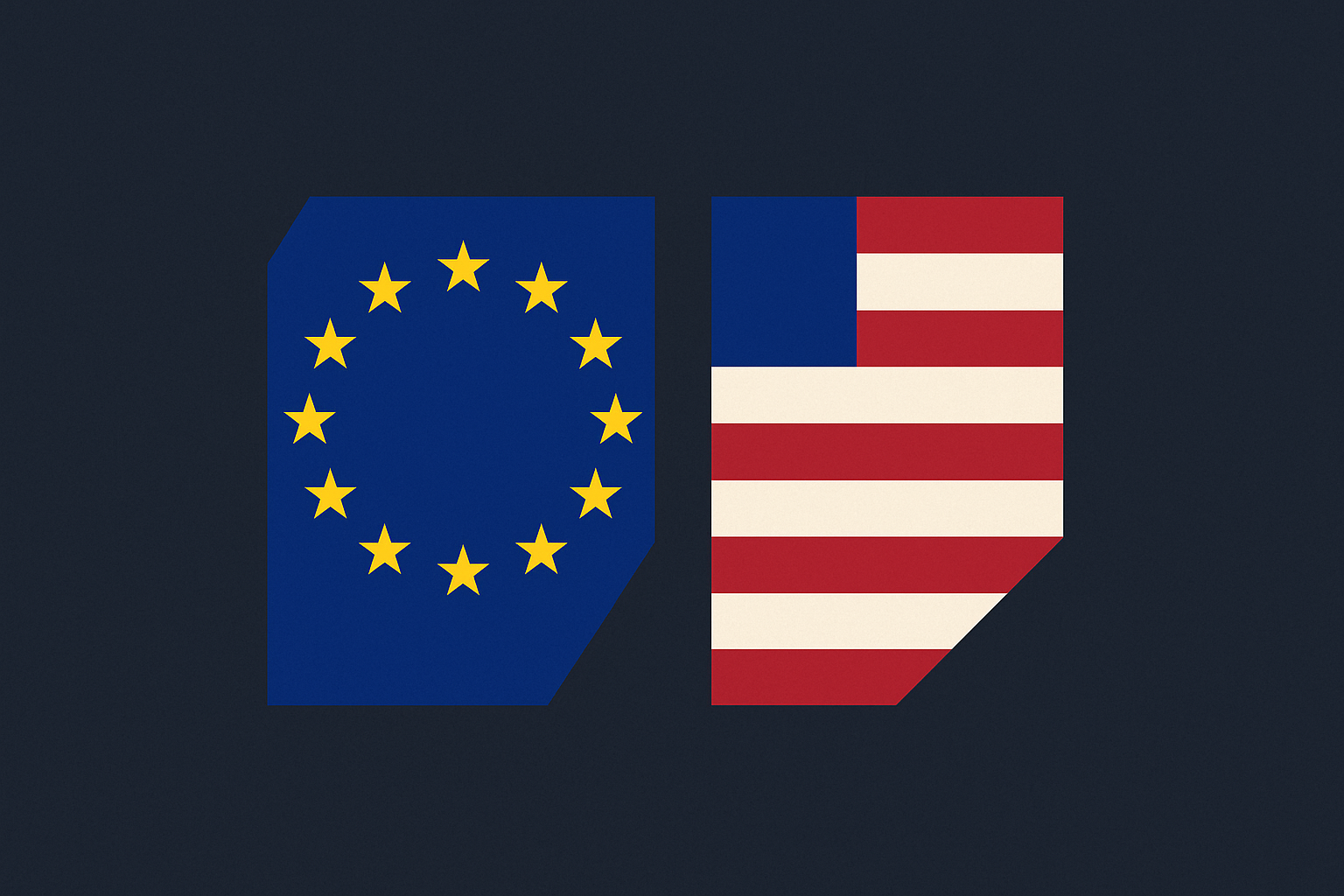
The two most powerful sanctions regimes in the world — European Union sanctions and US OFAC (Office of Foreign Assets Control) sanctions — operate under fundamentally different legal frameworks, with different designation criteria, different delisting procedures, and different practical consequences. Understanding the distinctions is essential for anyone affected by either regime or both simultaneously.
Legal Basis and Authority
EU Sanctions are issued under EU Council regulations, legally binding on all 27 EU member states. EU sanctions decisions require unanimity in the EU Council, meaning all member states must agree. They are implemented through EU-level acts and enforced by national authorities in each member state. Judicial review is available at the Court of Justice of the European Union (CJEU) — the ECJ — which applies EU fundamental rights standards and proportionality review.
US OFAC Sanctions are issued by the US Treasury Department’s Office of Foreign Assets Control under executive authority — including the International Emergency Economic Powers Act (IEEPA) and various country-specific statutes. They have extraterritorial effect: non-US persons and entities doing business in US dollars or with US persons can be subject to US secondary sanctions regardless of where they are located. Judicial review in US federal courts is available but OFAC decisions receive significant deference.
Designation Criteria
EU sanctions typically require a specific nexus to the policy concern driving the sanctions regime — for example, involvement in the conflict in Ukraine, support for the Assad government in Syria, or connection to specific named terrorist organisations. The nexus requirement is taken seriously by the CJEU, which has annulled EU listings where the factual basis was insufficient.
US OFAC designations can be broader — the SDN (Specially Designated Nationals) list includes individuals designated under various executive orders and statutory authorities, sometimes on the basis of indirect connections (ownership, control, or acting for or on behalf of a designated party). Secondary sanctions — the extraterritorial sanctions that threaten non-US persons — do not require any direct US nexus from the designated party.
Delisting Procedures
EU Delisting: Challenge through CJEU annulment action (Article 263 TFEU) — requires showing that the designation decision is unlawful. The CJEU has broad powers to review EU listings and has annulled numerous designations, particularly on grounds of insufficient evidence or failure to state adequate reasons. Timeline: 2 to 5 years for full CJEU proceedings, but interim measures are available.
OFAC Delisting: Administrative petition to OFAC using Form TDF 90-22.54. OFAC conducts its own internal review. If refused, challenge in US federal court. Timeline: OFAC administrative review can take 1 to 3 years; US litigation adds further time. OFAC also issues specific licences allowing certain transactions despite the listing — a faster but more limited remedy.
Practical Differences for Designated Persons
| Feature | EU Sanctions | US OFAC |
|---|---|---|
| Asset freeze scope | EU-held assets only | Global (via dollar clearing) |
| Secondary sanctions | Limited | Extensive |
| Judicial review quality | Strong (CJEU) | Deferential (US courts) |
| Humanitarian exemptions | Yes — living expenses | Yes — OFAC licence |
Being listed under both EU and US sanctions simultaneously — common in major geopolitical sanctions cases — requires a coordinated strategy addressing both regimes in parallel. Our Cyprus-based lawyers coordinate with EU and US specialist counsel to develop comprehensive dual-regime delisting strategies. Contact us for a confidential consultation.